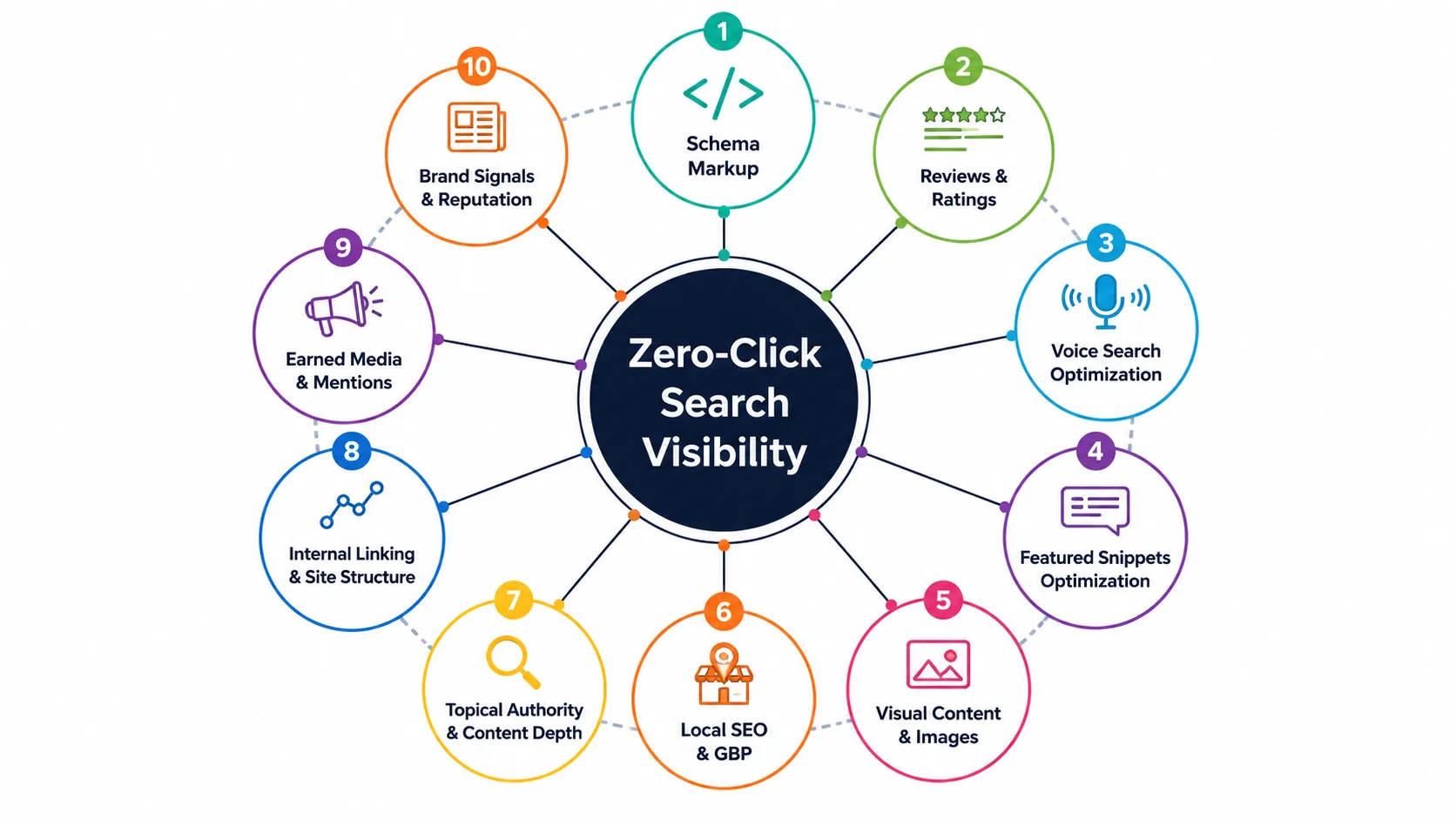
The way people find information online is evolving faster than ever before. Today, a significant portion of Google searches ends without a single click to a website. This phenomenon, known as zero-click search, means users get their answers directly on the search results page through featured snippets, knowledge panels, and AI-generated overviews. Consequently, brands that once relied on organic traffic must now rethink their entire digital strategy.
Moreover, the rise of AI-powered search engines has accelerated this shift dramatically. When a user types a query, AI systems now synthesize answers from multiple sources and present them instantly. As a result, your brand might be referenced in an AI summary without ever receiving a website visit. Therefore, understanding how to maintain visibility in this new environment is not optional; it is essential for survival.
In this comprehensive guide, we will explore practical, actionable strategies to keep your brand visible when AI answers the prompt. Additionally, we will cover how to optimize for citations, build brand authority, and measure success beyond traditional clicks. By the end, you will have a clear roadmap for thriving in the zero-click search era.
What Is Zero-Click Search and Why Does It Matter?
Defining the Zero-Click Phenomenon
A zero-click search occurs when a user’s query is answered entirely within the search engine results page (SERP), eliminating the need to click through to any website. For example, if someone searches for “what is zero-click search,” Google may display a definition box, a People Also Ask section, and an AI Overview, all containing the answer.
Furthermore, recent data indicates that zero-click rates have reached approximately 58.5% in the United States and 59.7% in the European Union. On mobile devices, this figure climbs even higher to around 77.2%. These numbers reveal a stark reality: most searches now end without website engagement.
The AI Multiplier Effect
Artificial intelligence has amplified the zero-click search trend significantly. Google’s AI Overviews, ChatGPT, Perplexity, and other generative platforms now provide synthesized answers that pull from multiple sources simultaneously. In fact, AI Overview source click rates are estimated at merely 1%, meaning even when your content is cited, the likelihood of a visit is minimal.
However, this does not mean visibility is worthless. On the contrary, being cited in an AI answer builds brand recognition, establishes authority, and influences purchase decisions even without direct clicks. Therefore, the goal shifts from driving traffic to earning mentions and citations.
How Zero-Click Search Impacts Brand Visibility
The Erosion of Traditional Organic Traffic
For years, SEO success was measured primarily by organic traffic and keyword rankings. Yet in the zero-click search era, these metrics tell an incomplete story. A brand can rank in position one and still receive no clicks because the answer appears in a featured snippet above the traditional results.
In addition, AI Overviews have been shown to reduce click-through rates by approximately 47%. This means that even top-ranking pages are seeing diminished returns. As a result, businesses must redefine what success looks like and invest in strategies that prioritize visibility over volume.
The Opportunity in Impressions
While zero-click search reduces website visits, it simultaneously increases brand impressions. Every time your brand is mentioned in a knowledge panel, featured snippet, or AI summary, you gain exposure. Consequently, these impressions build familiarity and trust over time.
Furthermore, users who see your brand repeatedly in AI-generated answers begin to associate it with authority. When they eventually need a solution your business provides, they are more likely to search for your brand directly. Thus, zero-click search creates a foundation for future conversions even when immediate clicks are absent.
Strategy 1: Optimize for AI Citations and Featured Snippets
Structure Content for Answer Extraction
To win in the zero-click search environment, your content must be easily extractable by AI systems. This means organizing information so that algorithms can quickly identify and quote your material. Specifically, you should open each section with a concise, standalone answer of 40 to 60 words that directly addresses the implied question.
For instance, instead of burying the answer within a lengthy paragraph, state it clearly at the beginning. Then, follow up with supporting details, examples, and context. This approach satisfies both human readers and AI crawlers simultaneously. Forbes Agency Council outlines several best practices for increasing brand visibility on AI search engines, and structuring content for extraction sits at the top of their recommendations.
Implement Schema Markup
Structured data helps search engines understand your content with precision. By adding schema markup such as FAQPage, HowTo, Article, and Organization schemas, you signal to AI systems exactly what your content represents.
Moreover, schema markup increases your chances of appearing in rich results and AI Overviews. For example, FAQ schema can trigger accordion-style results in the SERP, while HowTo schema may produce step-by-step visual guides. These enhanced formats improve visibility even when clicks are unlikely.
Target Question-Based Queries
Modern search behavior is increasingly conversational. Users ask full questions rather than typing fragmented keywords. Therefore, your content strategy should map the entire question ecosystem around your topics.
Start by extracting People Also Ask questions for your target topics. Then, create content that answers each question comprehensively. Additionally, build topical coverage across 50 or more related questions to demonstrate depth and authority. This breadth signals to AI systems that your brand is a reliable source for the entire subject area.
Strategy 2: Build Brand Search Equity
Why Branded Searches Protect Against Zero-Click Losses
When users search for your brand name directly, they intend to visit your website. Branded searches are largely immune to zero-click erosion because the user already knows what they want. Therefore, increasing branded search volume is one of the most reliable hedges against declining organic clicks.
Furthermore, strong brand equity means AI systems are more likely to cite you as an authority. When your brand appears consistently across trusted sources, algorithms gain confidence in your expertise. This creates a virtuous cycle where brand strength leads to more citations, which in turn builds more brand recognition.
Tactics to Increase Branded Search Volume
To build brand search equity, invest in thought leadership content that showcases your unique perspective. Publish original research, industry benchmarks, and proprietary data that other publications want to cite. Additionally, maintain a multi-channel presence across social media, video platforms, and podcasts to keep your brand top-of-mind.
Another effective tactic is community building. When you foster a loyal audience through newsletters, forums, or exclusive content, members will search for your brand directly. Our email marketing services can help you nurture these relationships and drive branded searches consistently.
Strategy 3: Establish Authority Through Earned Media
The Power of Third-Party Validation
AI systems trust what others say about your brand more than what you publish yourself. Consequently, earning coverage from authoritative third-party sources is critical for zero-click search visibility. When reputable publications mention your brand, AI algorithms weigh those signals heavily.
In addition, earned media creates a network of citations that reinforces your authority. Each mention in a trusted outlet compounds over time, making AI systems more confident in surfacing your brand. Therefore, PR should be viewed not just as a branding tool, but as a core component of your AI visibility strategy.
How to Earn High-Authority Coverage
Begin by publishing one original research asset per quarter. This could be an industry survey, a data report, or a benchmark study. Then, pitch these assets to publications in your niche as source material rather than promotional content. The goal is to become the cited expert on a topic, not to secure a backlink.
Furthermore, make your subject matter experts available for commentary and quotes. Journalists and content creators frequently seek authoritative voices, and consistent participation builds your brand’s citation network. Our content marketing services can support you in developing these research-driven assets and outreach campaigns.
Strategy 4: Optimize for Conversational and Voice Search
Understanding Prompt-Based Queries
AI-powered search engines process natural language prompts rather than keyword strings. Users ask complete questions, provide context, and expect nuanced answers. Therefore, your content must mirror this conversational style to remain visible.
To achieve this, write content that flows like a dialogue. Anticipate follow-up questions and address them within the same piece. For example, if you explain “what is zero-click search,” immediately cover “why does it matter” and “how can brands adapt.” This continuity helps AI systems extract comprehensive answers from your content.
Voice Search Considerations
Voice assistants like Siri, Alexa, and Google Assistant rely heavily on concise, spoken-language answers. When optimizing for voice, prioritize clarity and brevity. Use short sentences, avoid jargon, and structure responses so they sound natural when read aloud.
Moreover, voice searches often have local intent. If your business serves specific geographic areas, ensure your local SEO is robust. Our search engine optimization services include local optimization strategies that improve visibility for voice and mobile queries alike.
Strategy 5: Diversify Your Discovery Channels
Reducing Dependence on Google Alone
While Google remains dominant, relying solely on it is risky in the zero-click search era. Users now discover information through YouTube, LinkedIn, TikTok, ChatGPT, Perplexity, and other platforms. Each channel has different citation preferences and audience behaviors.
For example, ChatGPT favors authoritative, well-structured content, while Perplexity weights recent sources more heavily. YouTube prioritizes engagement signals, and LinkedIn rewards thought leadership. By maintaining presence across multiple platforms, you increase the odds that AI systems will encounter and cite your brand regardless of where the query originates.
Building a Multi-Platform Content Ecosystem
Repurpose your core content for different formats and channels. Turn a blog post into a LinkedIn article, a YouTube video, and a series of social media posts. Additionally, encourage your team members to share insights from their personal profiles, as employee-generated content expands your brand footprint authentically.
Our social media marketing services can help you develop a cohesive multi-platform strategy that maximizes visibility across every touchpoint.
Strategy 6: Leverage Reviews and Social Proof
Why Reviews Matter for AI Visibility
Online reviews are among the most powerful forms of third-party validation. AI platforms actively crawl review sites like Google Reviews, Yelp, G2, and Capterra when generating recommendations. Therefore, a strong review profile directly impacts whether your brand appears in AI-generated answers.
Furthermore, reviews provide fresh, recent content that AI systems weight heavily. A consistent flow of new reviews outperforms a large but stale collection. As a result, you should implement a systematic approach to requesting and managing reviews.
Building Review Velocity
Start by identifying your most satisfied customers through Net Promoter Score surveys. Then, route promoters to the review platforms most relevant to your audience. For B2B brands, this might mean G2 or TrustRadius; for local businesses, Google Reviews and Yelp are essential.
Additionally, respond to all reviews promptly and professionally. This engagement signals to both AI systems and potential customers that you value feedback. Over time, this practice strengthens your credibility and improves your chances of being cited in AI responses.
Strategy 7: Make Your Brand Legible to AI Agents
Agent-Readiness Fundamentals
The next evolution of search involves AI agents that browse, compare, and transact across multiple sources autonomously. To be surfaced by these agents, your brand information must be machine-readable, consistent, and current.
This means implementing comprehensive structured data, maintaining consistent product and service descriptions across all platforms, and ensuring your website is technically sound. Broken pages, redirect loops, and blocked resources prevent agents from accessing the data they need to recommend you.
Consistency Across the Web
AI agents cross-reference your brand information across your website, third-party listings, app stores, and review platforms. Any inconsistency, whether in pricing, descriptions, or contact details, can downgrade your visibility. Therefore, conduct regular audits to ensure alignment across all channels.
Our brand strategy services include comprehensive brand consistency audits that identify and resolve discrepancies across your digital ecosystem.
Strategy 8: Measure What Matters in the Zero-Click Era
Shifting from Clicks to Visibility Metrics
Traditional SEO metrics like organic traffic and keyword rankings are no longer sufficient. In the zero-click search landscape, you must track brand mentions, AI citations, share of voice in AI answers, and branded search volume.
These metrics reveal whether your brand is being discovered and referenced, even when website visits are not occurring. Additionally, they help you identify which content and channels are driving the most visibility, allowing you to allocate resources strategically.
Key Performance Indicators to Track
Consider monitoring the following KPIs:
- AI citation rate: How often your content is referenced in AI-generated answers
- Brand mention volume: The frequency of your brand name appearing across AI platforms
- Share of voice: Your brand’s proportion of mentions relative to competitors
- Branded search volume: The number of users searching for your brand directly
- SERP feature presence: How often you appear in featured snippets, knowledge panels, and local packs
By establishing these baselines and tracking them monthly, you can refine your strategy based on actual visibility data rather than traffic alone. Our marketing automation services include advanced reporting dashboards that track these emerging metrics.
Strategy 9: Refresh and Maintain Content Freshness
The Importance of Recency
AI systems prioritize recent content when generating answers. Pages that have not been updated in several months are significantly more likely to lose citations. Therefore, content freshness is a critical factor in maintaining zero-click search visibility.
To address this, implement a regular content audit schedule. Update statistics, refresh examples, and revise outdated information on your top-performing pages. Additionally, add “last updated” timestamps to signal freshness to both users and algorithms.
Creating Evergreen Content with Update Cycles
While some content is inherently time-sensitive, much of your material can be evergreen with periodic maintenance. Build update cycles into your editorial calendar so that no important page goes stale. This practice not only preserves AI citations but also maintains relevance for human readers.
Strategy 10: Focus on Conversion Optimization for Remaining Clicks
Maximizing Value from Fewer Visits
Since zero-click search reduces total click volume, every visit you do receive becomes more valuable. Therefore, optimizing your landing pages for higher conversion rates is essential. This means clear calls-to-action, fast load times, mobile-friendly design, and persuasive copy that aligns with user intent.
Furthermore, focus your click-driving content on transactional and commercial queries. Informational queries are more likely to end without a click, whereas users searching with purchase intent are still likely to visit your site. By aligning your SEO strategy with funnel stage, you can capture the clicks that matter most.
Landing Page Best Practices
Ensure your landing pages answer the specific question that brought the user there. Use clear headings, bullet points, and visual hierarchy to guide visitors toward conversion. Additionally, minimize distractions and reduce friction in forms and checkout processes.
Our web development services specialize in creating high-converting landing pages that maximize the value of every visitor.
Frequently Asked Questions About Zero-Click Search
What exactly is zero-click search and how does it work?
Zero-click search occurs when a search engine answers a user’s query directly on the results page, so the user does not need to click any website link. Google displays featured snippets, knowledge panels, and AI Overviews that extract and synthesize information from multiple sources. As a result, the user gets instant answers while websites may receive no traffic.
How can my brand still benefit from zero-click search if users never visit my site?
Even without clicks, zero-click search builds brand awareness, establishes authority, and influences future purchase decisions. When AI systems cite your brand, users begin to associate it with expertise. Over time, this familiarity leads to direct branded searches and conversions. Therefore, visibility itself has measurable value.
What types of content are most likely to be cited in AI-generated answers?
AI systems prefer original research, definitive guides, expert interviews, and comparison tables. Content with clear question-answer structures, concise definitions, and proper schema markup is also more likely to be cited. Additionally, fresh content with recent publication dates performs better than stale material.
Should I stop investing in traditional SEO because of zero-click search?
No, traditional SEO remains foundational. Technical health, domain authority, and keyword optimization still matter significantly. However, you should expand your strategy to include generative engine optimization (GEO) and AI visibility tactics. SEO gets you in the room; GEO puts you in the conversation.
How do I optimize my website for voice search and AI assistants?
Focus on conversational language, concise answers, and structured data. Anticipate full questions rather than fragmented keywords. Additionally, ensure your site loads quickly, is mobile-friendly, and uses schema markup so AI assistants can extract information efficiently.
What is the best way to measure success in a zero-click search environment?
Shift from traffic-based metrics to visibility-based KPIs. Track AI citation rates, brand mention volume, share of voice, branded search volume, and SERP feature presence. These indicators reveal whether your brand is being discovered and referenced, even when clicks are absent.
How often should I update my content to maintain AI visibility?
Aim to review and refresh your top-performing content at least quarterly. Update statistics, revise outdated examples, and add new insights. Pages that have not been updated in over three months are more likely to lose AI citations. Consistent freshness signals authority to both algorithms and users.
Can small businesses compete with larger brands in zero-click search?
Yes, small businesses can compete by focusing on niche expertise, local optimization, and original insights. AI systems value authority and relevance over size alone. By building topical depth, earning local reviews, and publishing unique research, smaller brands can earn citations alongside larger competitors.
Conclusion
The rise of zero-click search represents one of the most significant shifts in digital marketing history. As AI systems increasingly answer user prompts directly, brands must evolve their strategies to prioritize visibility, citations, and authority over traditional click metrics. However, this shift also creates tremendous opportunity for businesses that adapt early.
By optimizing for AI citations, building brand search equity, earning third-party validation, and diversifying across discovery channels, you can maintain and even grow your visibility in this new landscape. Furthermore, focusing on content freshness, agent-readiness, and conversion optimization ensures that every impression counts.
At AMA Tactical Media, we specialize in helping brands navigate these complex transitions. Whether you need search engine optimization, content marketing, or a comprehensive brand strategy, our team has the expertise to keep you visible when AI answers the prompt.
Ready to future-proof your brand’s visibility? Contact us today for a free consultation, and let us build a zero-click search strategy tailored to your business goals.